Event 1
Linnet Ridgeway and Simon Doyle’s marriage
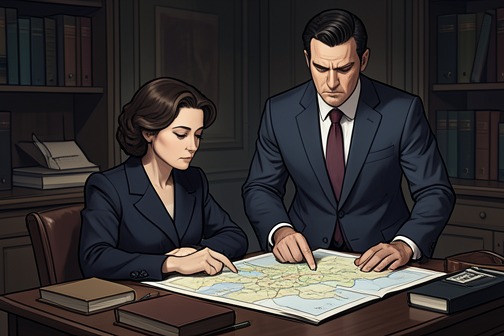
[Linnet Doyle](entity:character-recall-character-linnet-doyle-15dd8b9e22bd) and [Simon Doyle](entity:character-recall-character-simon-doyle-104ec16e65c4)’s marriage begins in the evidence not with a courtship between them but with [Jacqueline de Bellefort](entity:character-recall-character-jacqueline-de-belle-03379cfdd0b8)’s request that Linnet employ her fiancé. The resulting reversal is the defining circumstance of their union: Linnet offers Simon a position as a land agent, welcomes him into her home, and discovers an attraction she does not voice to Jacqueline. The scenes establish the emotional beginnings and unequal social conditions around the marriage, but do not describe its ceremony or date.
## Background and Arrangement
Jacqueline first tells Linnet that she and Simon are engaged and intensely in love. She describes him as a poor younger son from Devonshire whose office job has disappeared as his employer cuts back. Her request is practical as well as intimate: because Linnet has bought an estate and will need a land agent, Jacqueline asks her friend to give Simon the job. Simon’s employment is therefore introduced as a favor sought by his fiancée, not as the result of a position he independently pursues in the scenes shown.
The request places the three characters in markedly different circumstances. Jacqueline says she has been taking grim jobs and insists that she cannot live without Simon; she hopes Linnet’s wealth and new property can provide a way forward for the couple. Simon, by contrast, is presented as having no money and no work. Linnet has the means to offer him employment, and her response gives the request a consequence beyond practical assistance: it brings her into close contact with the man Jacqueline loves. The marriage’s beginnings are thus bound to money, work, friendship, and an arrangement made at Jacqueline’s initiative.
## First Meeting and Emotional Reversal
When a car arrives, Linnet goes out to meet Jacqueline and the young man she assumes is her companion. Jacqueline runs to her and introduces Simon, praising Linnet to him as a wonderful person. Linnet sees a tall, broad-shouldered young man with dark blue eyes, curling brown hair, a square chin, and a boyish smile. She also notices his genuine admiration for her. The encounter is filtered through Linnet’s response: his favorable impression of her matters not only as a social courtesy but as the immediate source of her pleasure.
Linnet welcomes Simon as her new land agent. As she leads the way inside, she recognizes that she likes Jacqueline’s fiancé enormously and feels a sudden pang at Jacqueline’s good fortune. That private thought turns the employment arrangement into an emotional turning point. The welcome is warm and apparently generous, yet the reader is allowed to see the feeling Linnet keeps to herself. Her attraction is not presented as a declaration or an action against Jacqueline in that moment; it appears as an inward contradiction between her happiness at meeting Simon and her awareness that he belongs, as a fiancé, to her friend.
## The Marriage as a Reversal
A later conversation makes the change in Simon’s prospects explicit. [Tim Allerton](entity:character-recall-character-tim-allerton-59294652b4f8) reports that Linnet has rejected a wealthy suitor and is definitely going to marry the land agent. He also identifies Simon as one of the Devonshire Doyles, without money, and notes that Simon had been engaged to one of Linnet’s closest friends. The report recasts the earlier meeting: the man Jacqueline introduced as her future husband has become the man Linnet intends to marry. It also confirms that the reversal is visible to other people, not merely an unspoken feeling in Linnet’s private response.
The account distinguishes financial security from the match Linnet chooses. Simon has little money, while Linnet is wealthy enough to employ him and is reported to have turned down a more affluent marriage prospect. Those facts make the union a conspicuous change in status and attachment, but the available scenes do not explain the intervening steps or state how the engagement between Jacqueline and Simon ended. They establish the contrast and its consequence without filling in the missing courtship.
## Relationships and Narrative Significance
Jacqueline’s request gives the marriage its sharpest irony. She trusts Linnet enough to ask her to help Simon, and Linnet initially receives him in the role Jacqueline has named: her fiancé and Linnet’s new employee. The scenes then place that trust beside Linnet’s concealed attraction and the later news that Linnet will marry him. [Mrs. Allerton](entity:character-recall-character-mrs-allerton-88e3fc69edd2)’s disapproval of taking another person’s husband supplies a social judgment on the reversal, while Tim’s account frames it as an unusually tangled change in allegiance.
The marriage is therefore significant as both a private attachment and a rupture in the prior arrangement among the three characters. Its origin joins economic dependence to personal choice: Simon enters Linnet’s world through a job she can provide, while Linnet’s response to him begins in the same encounter that confirms his engagement to Jacqueline. The contrast between Jacqueline’s urgent certainty that she and Simon cannot live apart and the later announcement of his marriage to Linnet makes the union’s emotional cost legible even before the scenes explain how it came about. The evidence presents the marriage through its setup, its first emotional disturbance, and its later confirmation—not through a wedding scene.
Event 2
Jacqueline’s tracking of the Doyle couple
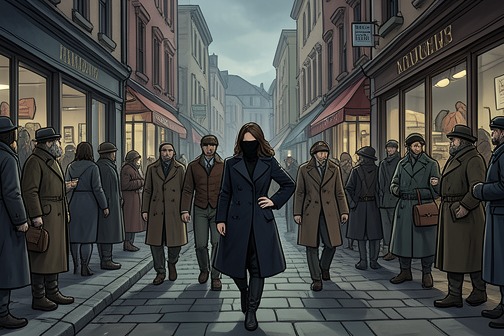
[Jacqueline’s tracking of the Doyle couple](entity:event-recall-event-f9e2530565da) turns the aftermath of a broken engagement into a persistent presence on their honeymoon. From Venice to the [Nile](entity:location-recall-location-924125bfb62e), her repeated appearances frustrate their attempts to leave the past behind and make her seem, to those around them and later to the investigators, an obvious source of danger. That apparent clarity is part of the event’s importance: the pursuit supplies a credible public history of conflict, but it does not by itself explain the carefully planned murder that follows.
## Causes and Background
Before Linnet married Simon, he had been engaged to Jacqueline, who was also Linnet’s friend. Linnet described Simon as having broken off the engagement because he and Jacqueline were not suited to one another. Jacqueline took the breakup hard. Linnet also said that Jacqueline had made threats, though she had paid little attention to them and believed Jacqueline had not carried them out. Instead, Jacqueline adopted what Linnet called the extraordinary course of following the couple wherever they went.
Linnet’s account combines an explanation with an attempt to contain the problem. She presents the engagement as already over and the threats as unrealized, suggesting that the couple had reason to regard the matter as an embarrassment rather than an immediate danger. Yet her repeated encounters with Jacqueline steadily undermine that interpretation. The gap between Linnet’s composed account and the persistence of the pursuit gives it its tension: the honeymoon proceeds, but Jacqueline remains in its path.
## The Route of the Pursuit
The first encounter Linnet recalled was in Venice, where Jacqueline was at Daniellfs. Linnet initially thought this might be coincidence. The appearance was embarrassing, but it did not yet establish a pattern. The next encounter came at Brindisi, where the Doyles found Jacqueline aboard a boat. They understood that she was travelling to Palestine and left her there, believing that their routes had separated.
At [Mena House](entity:location-recall-location-784fb34e96db), however, Jacqueline was waiting for them. By then, a chance meeting had become harder for Linnet to believe. The couple continued their journey, travelling up the Nile by boat. Linnet said that she half expected Jacqueline to be aboard; when she was not, she thought Jacqueline had stopped behaving childishly. But on reaching their destination, they found her waiting again. The sequence matters because each departure briefly offers the possibility that the pursuit has ended, only for the next meeting to revoke it.
## The Encounter Aboard the [Karnak](entity:object-recall-object-karnak-48c74e418e7e)
The pattern became unmistakable when the Doyles began a seven-day journey to the [Second Cataract](entity:location-recall-location-9ccadfedc4e8) and back aboard the Karnak. Linnet and Simon had just appeared on deck, looking radiant and unusually happy. Jacqueline’s arrival interrupted that scene: she stood on the boat and greeted Linnet with apparent amusement, saying that she had not expected to find her there and had thought she would remain at [Aswan](entity:location-recall-location-34ffc28865d8) for another ten days.
Linnet stammered before forcing a conventional smile. Jacqueline moved to the other side of the boat, but the separation did not restore the couple’s ease. Linnet tightened her grasp on Simon’s arm and tried to speak to him; Simon’s earlier pleasure disappeared, and he looked furious, his hands clenching despite his effort at self-control. The encounter turns the pursuit from a series of reported sightings into an immediate confrontation. Jacqueline does not need to threaten them in that moment: her presence alone brings the broken engagement into the honeymoon’s public space and visibly changes the couple’s mood.
## Consequences and Narrative Significance
The pursuit establishes why Jacqueline could be suspected when Linnet was murdered. In discussing the evidence, Poirot describes a line of reasoning that made the case seem to point directly to her: someone had overheard a scene between Jacqueline and Simon, retrieved Jacqueline’s pistol, shot Linnet with it, and written the letter J on the wall. The history of Jacqueline’s anger and repeated appearances makes that interpretation persuasive. It supplies a ready-made motive and a known conflict around which suspicion can gather.
But Poirot identifies a contradiction in that apparently clear sequence. If the murderer meant to incriminate Jacqueline, he asks, why remove the pistol rather than leave such damaging evidence where it would be found? The question leads him and [Colonel Race](entity:character-recall-character-colonel-race-4c7f50723a8f) to recognize that their starting assumption—that the crime was committed spontaneously after someone overheard the confrontation—was wrong. Poirot later explains that the murder was planned and carefully timed, including the drugging of his wine bottle to keep him asleep. Jacqueline’s pursuit therefore has a double narrative effect: it is a genuine and unsettling part of the Doyles’ journey, while also providing the conspicuous background that can make a false account of the murder seem convincing.
Event 3
The boulder’s fall at Abu Simbel

[The boulder’s fall at Abu Simbel](entity:event-recall-event-a8adc9562abe) is a near-fatal attack—or apparent accident—that shatters a moment of ease for [Linnet Doyle](entity:character-recall-character-linnet-doyle-15dd8b9e22bd) and [Simon Doyle](entity:character-recall-character-simon-doyle-104ec16e65c4). Its decisive force lies not only in the boulder’s passage close enough to kill Linnet, but also in the reversal that follows: Simon first reacts with rage at the thought that [Jacqueline de Bellefort](entity:character-recall-character-jacqueline-de-belle-03379cfdd0b8) is responsible, then treats her unexpected arrival as reassurance that the fall was accidental. The danger is real; Simon’s explanation is not proof.
## Before the Fall
Linnet and Simon have passed on from sightseeing and do not want to return to the boat. Instead, they settle with their backs to the cliff, letting the warm sun bake them through. Their rest is unguarded in both posture and feeling: Linnet drifts between sleep and wakefulness, absorbed in the warmth and in her happiness, while Simon’s open eyes reflect contentment. He thinks there is nothing to be rattled about and that Jacqueline can be trusted. The scene establishes the security that the falling rock will abruptly overturn.
That confidence makes the danger more than an interruption to an outing. The couple have chosen a place of repose against the cliff, and for a moment the sun and their own sense of safety seem to hold the scene in place. Then a shout and the sound of someone running toward Simon break into his thoughts. He has only a moment to respond: he springs up and drags Linnet with him. The hazard is not anticipated or explained before it arrives; immediate action, rather than understanding, saves her.
## The Near-Miss
A large boulder hurtles down the cliff and crashes past them. The timing is crucial: Simon has pulled Linnet upright just before its passage, and the narration makes the counterfactual consequence explicit—had she remained where she was, she would have been crushed. The couple cling together, white-faced. The contrast between the sun-warmed stillness of their rest and the rock’s sudden, lethal movement makes the change in their circumstances instantaneous: ease gives way to the recognition that Linnet’s life was at risk.
Poirot and [Tim Allerton](entity:character-recall-character-tim-allerton-59294652b4f8) run up to the couple. Poirot remarks, “Ma foi, Madame, that was a near thing.” All four look toward the cliff, but nothing is visible there. Poirot recalls seeing local people walking along a path at its top when they first came ashore. That recollection gives the scene a possible human presence above them, but it does not identify anyone as responsible or settle whether the boulder was deliberately sent down or became detached on its own. The empty cliff leaves the cause uncertain even as the danger is unmistakable.
## Suspicion and Reversal
Simon’s first reaction is anger. He curses Jacqueline, then checks himself with a quick glance at Tim. The glance shows that he recognizes the need to restrain what he says in company; it does not resolve the suspicion behind his outburst. Tim offers two possibilities, asking whether some fool bowled the boulder over or whether it detached by itself. Linnet, pale and struggling to answer, thinks someone must have caused it. Tim’s lighthearted question about whether she has an enemy turns a dreadful possibility into spoken suspicion without confirming it.
Poirot quickly directs Linnet back to the boat for a restorative. Their silent walk preserves the different responses to the danger: Simon is still full of pent-up rage, Tim tries to talk cheerfully and distract Linnet, and Poirot remains grave. The movement toward the gangplank seems to take them away from the cliff, but Simon stops when Jacqueline comes ashore, dressed in blue gingham. He had been prepared to connect her with the boulder; seeing her arrive changes his reading of the event. “So it was an accident, after all,” he says under his breath, and the anger leaves his face as relief takes its place.
## Significance of the Scene
Jacqueline notices that something is amiss, but the scene does not show her being told the details of the near-miss. She greets the group, steps ashore, and walks toward the temple. Simon reaches for Poirot’s arm after the others have gone on. The sequence thus ends not with an identified culprit or a demonstrated cause, but with Simon’s private turn from suspicion to relief and an act of seeking contact with Poirot.
That turn is the scene’s central irony. Jacqueline’s arrival seems to Simon to absolve her because he assumes that a person responsible for the fall would not appear openly just afterward. Yet her presence only changes his interpretation; it supplies no evidence about the boulder’s origin. The episode leaves the question unresolved while establishing the seriousness of the threat, the couple’s vulnerability at the foot of the cliff, and the ease with which fear can be converted into a reassuring—but unverified—conclusion.
Event 4
Attempted boulder attack on Linnet Doyle
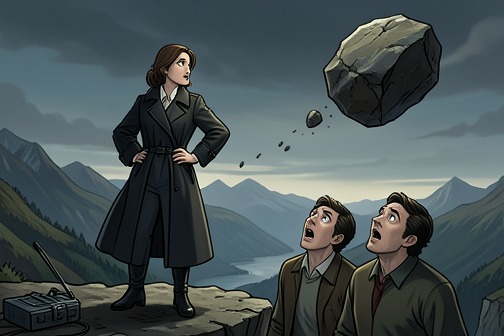
The [Attempted boulder attack on Linnet Doyle](entity:event-recall-event-attempted-boulder-attac-095df6ebc9dc) was a near-fatal incident at [Abu Simbel](entity:location-recall-location-b49cbc16745b) that later became a crucial part of the case against her killer. Initially treated as a possible accident, it was reconsidered when [Colonel Race](entity:character-recall-character-colonel-race-4c7f50723a8f) connected it to the attempt to make [Jacqueline de Bellefort](entity:character-recall-character-jacqueline-de-belle-03379cfdd0b8) appear responsible for [Linnet Doyle’s murder](entity:action-recall-action-linnet-doyle-s-murder-9d7484cb2a5f).
## The Near Escape at Abu Simbel
A boulder crashed down at Abu Simbel while [Linnet Doyle](entity:character-recall-character-linnet-doyle-15dd8b9e22bd) was there, and she narrowly escaped. The incident took place near the [Temple of Abu Simbel](entity:location-recall-location-ab50c0aab779). [Andrew Pennington](entity:character-recall-character-andrew-pennington-b20740f0de07) later said he had been inside the temple at the time, had heard about the incident afterward, and had thought it might have been an accident.
## Reconsidering the Incident
When [Hercule Poirot](entity:character-recall-character-hercule-poirot-16ed38cee024) raised the episode with Andrew Pennington, he questioned whether the boulder’s fall had really been accidental. His remark that someone had thought so at the time, but that the incident now invited doubt, marks the change in its significance: what had seemed like a mishap could be understood as an attempt to kill Linnet Doyle.
## Connection to the Murder Plot
Colonel Race later argued that the person who stole the pistol expected the crime to be attributed to Jacqueline de Bellefort, but could not have known that she would be kept under a nurse’s care and given morphia through the night. Race added that the person had already tried to kill Linnet Doyle by rolling a boulder over her, and was not Jacqueline. The attack thus established that the danger to Linnet preceded the shooting and that the same unknown assailant was implicated in both attempts.
Event 5
Theft of Linnet Doyle’s pearls
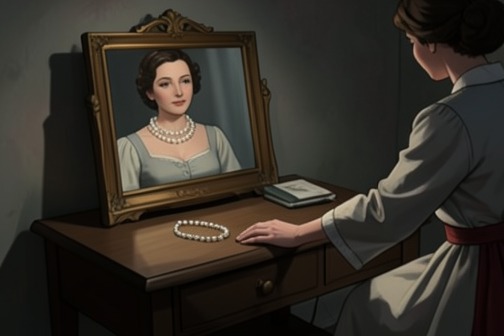
The [Theft of Linnet Doyle’s pearls](entity:event-recall-event-theft-of-linnet-doyle-s-41e34aa255ce) is a parallel mystery in the investigation aboard the [Karnak](entity:object-recall-object-karnak-48c74e418e7e): after [Linnet Doyle’s murder](entity:action-recall-action-linnet-doyle-s-murder-9d7484cb2a5f), the pearls are missing from the place where she kept them, and a later return appears to resolve the loss only to reveal a substitution. The changing status of the necklace complicates the evidence and reinforces [Hercule Poirot](entity:character-recall-character-hercule-poirot-16ed38cee024)’s need to question an apparently clear account of events.
## The disappearance
Poirot asks [Louise Bourget](entity:character-recall-character-louise-bourget-d7913038aeac) whether she knows anything about her mistress’s pearls. Louise recalls that [Linnet Doyle](entity:character-recall-character-linnet-doyle-15dd8b9e22bd) wore them the previous night and had placed them on the table beside her bed, as usual. She cannot say whether they were there in the morning: on entering the room, she saw her mistress, cried out, and rushed away. Poirot points out that the pearls were not on the bedside table that morning. Their absence is thus established not by Louise’s inspection, but by Poirot’s attention to what was missing at the scene.
The exchange leaves the precise moment of the pearls’ disappearance unobserved. Louise confirms their last known placement, but her distress at discovering Linnet Doyle prevents her from checking the table afterward. The missing necklace therefore becomes a concrete gap in the sequence of events surrounding the murder, rather than a theft witnessed or explained by the maid.
## A return that does not settle the question
Later, [Miss Bowers](entity:character-recall-character-miss-bowers-728cb3aa64ed) enters the smoking-room and immediately gives [Colonel Race](entity:character-recall-character-colonel-race-4c7f50723a8f) a string of pearls from her neat black handbag. Her composed manner contrasts with the sensation her action causes. The return seems to offer a straightforward answer to the disappearance, but it does not establish that these are Linnet Doyle’s original pearls.
Hercule Poirot examines the string, holding it to the light and testing it by touch and taste. He concludes that the pearls are a clever imitation. The apparent recovery therefore deepens the mystery: the necklace handed to Colonel Race is not genuine, and its return does not account for the missing originals. The distinction between a real necklace and a convincing copy becomes central to understanding what has happened to the property.
## Place in the investigation
The pearls’ disappearance initially sits alongside other suspicious evidence in Linnet Doyle’s murder. Poirot questions how someone could have retrieved [Jacqueline de Bellefort’s pistol](entity:object-recall-object-jacqueline-de-bellefor-5446c8f4d916), used it to implicate her, and then thrown that very weapon overboard. The choice to remove such damning evidence conflicts with the investigators’ first idea that the murder was a spontaneous act and forces them to reconsider the sequence.
Poirot later acknowledges that he and Colonel Race began with that mistaken assumption. The crime, he explains, was carefully planned and accurately timed; the drugging of his wine was one part of the plan. In that wider investigation, the missing pearls and their imitation return are among the facts that must be assessed without forcing them into an early theory. The evidence here establishes the necklace’s last known place, its absence after the murder, and the inauthenticity of the returned string, but does not identify who removed the original pearls.
Event 6
Murder of Louise Bourget
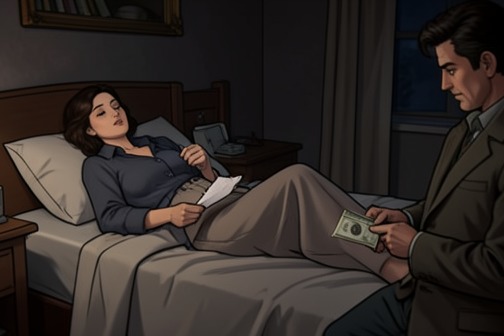
[Louise Bourget](entity:character-recall-character-louise-bourget-d7913038aeac)’s murder is the point at which a hidden witness’s attempt to profit from what she saw becomes a second killing. Her death both exposes the blackmail connected to [Linnet Doyle’s murder](entity:action-recall-action-linnet-doyle-s-murder-9d7484cb2a5f) and helps [Hercule Poirot](entity:character-recall-character-hercule-poirot-16ed38cee024) reconstruct how the conspirators’ plan began to unravel.
## Discovery and Immediate Clues
Louise is found dead in her cabin, concealed under the bed. [Colonel Race](entity:character-recall-character-colonel-race-4c7f50723a8f) estimates that she has been dead for close to an hour; Poirot notices a scrap of pale mauve-pink paper held in her hand, which Race identifies as the corner of a thousand-franc note. The fragment suggests that Louise had demanded money from the murderer in exchange for her silence. Poirot connects the payment to her earlier, evasive answer about possibly going upstairs and seeing someone enter or leave [Linnet Doyle](entity:character-recall-character-linnet-doyle-15dd8b9e22bd)’s cabin: her indirect wording now points to an observation she had withheld. In Poirot’s reconstruction, the murderer came to pay her, and Louise was counting the money when she was killed; the torn note was left behind as the killer gathered the rest and fled.
## How the Murder Changed the Investigation
Louise’s death forced Hercule Poirot to revisit the assumptions that had shaped the inquiry into Linnet Doyle’s murder. He and Colonel Race had initially imagined a crime committed on impulse: someone seized the chance to frame [Jacqueline de Bellefort](entity:character-recall-character-jacqueline-de-belle-03379cfdd0b8), obtained her pistol after overhearing the quarrel between Jacqueline and [Simon Doyle](entity:character-recall-character-simon-doyle-104ec16e65c4), and then used it to kill Linnet. But the pistol had been removed and thrown overboard. That did not fit the apparent purpose of the framing, and Poirot recognized that the inconvenient detail could not simply be discarded to preserve the theory. The investigators had to begin again.
The new explanation depended on treating the murder of Linnet as carefully planned, not spontaneous. Poirot concluded that he himself had been drugged through his wine so he would be unlikely to intervene, while the staged shooting of Simon created an apparent obstacle to his leaving his cabin. Louise’s death gave the puzzle a human link: she had been awake, had gone upstairs, and had seen Simon move to Linnet’s cabin and return. Her indirect appeal to Simon in the doctor’s cabin showed that she was trying to make him understand what she knew; his reassurance that nobody suspected her answered the threat without exposing it to the others.
Simon could not carry out the killing while confined to his cabin, so Poirot identified Jacqueline as the partner who acted for him. Simon arranged to speak with her once Louise’s knowledge became an immediate danger. Jacqueline then used the hush money as cover: Louise was counting the notes when Jacqueline killed her, and the torn corner left in Louise’s hand survived the departure. Jacqueline later acknowledged that Simon had told her what she must do and that, frightened for their safety, she took the money they could gather, pretended to plead with Louise, and killed her while Louise was occupied.
## The Murder’s Further Consequences
Louise’s death did not secure the conspirators’ silence. [Salome Otterbourne](entity:character-recall-character-salome-otterbourne-f4ae703c6ed7) had seen Jacqueline enter Louise’s cabin and went to tell Simon. His urgent shout was not merely an outburst: Poirot later understood it as a warning to his accomplice. Jacqueline heard the danger, obtained a revolver, and fired before Salome could disclose what she had witnessed. The killing of Louise thus led directly to another attempt to silence a witness, extending the consequences of the original murder beyond the cabin and exposing how quickly the conspirators acted when their plan was threatened.
The episode also marks the point where a carefully arranged appearance of safety begins to give way. Louise’s wakefulness was an unforeseen breach in the plan: what she had seen made her dangerous, and her attempt to turn that knowledge into money made her a target. Her death therefore serves both as the consequence of her blackmail and as a link in the chain of disclosures that ultimately reveals the partnership behind Linnet Doyle’s murder.
## Reconstruction Rather Than Witnessed Action
The murder is presented first through its aftermath, not as a scene the reader watches unfold: the body and the torn banknote are discovered, while the payment and attack must be pieced together from physical evidence, Louise’s earlier evasive remarks, and later testimony. That distinction gives the episode its double role. Louise’s death is an act within the conspiracy, but its circumstances also become evidence against the conspirators, converting an attempt to suppress knowledge into the means by which that knowledge is reconstructed.
Event 7
Murder of Salome Otterbourne
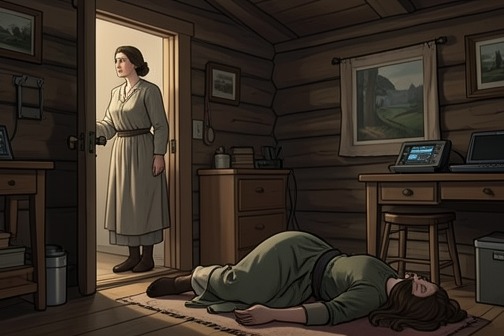
The [Murder of Salome Otterbourne](entity:event-recall-event-murder-of-salome-otterb-fec94548895d) occurs as [Salome Otterbourne](entity:character-recall-character-salome-otterbourne-f4ae703c6ed7) is about to disclose what she knows about the murder of [Linnet Doyle](entity:character-recall-character-linnet-doyle-15dd8b9e22bd). Her testimony offers a crucial lead: she had seen someone enter [Louise Bourget](entity:character-recall-character-louise-bourget-d7913038aeac)’s cabin. Before she can identify that person, she is shot, and the weapon is later linked to [Andrew Pennington](entity:character-recall-character-andrew-pennington-b20740f0de07)’s revolver.
## The Interrupted Disclosure
Salome enters [Simon Doyle](entity:character-recall-character-simon-doyle-104ec16e65c4)’s cabin insisting that she has vital information and knows who killed his wife. Poirot and Race are there questioning Simon about a telegram when she arrives. Simon, Poirot, and Race turn their attention to her as she prepares to explain what she has learned.
Salome says she had arranged to meet a man on the deck below, near the stern. On her way there, she saw Louise Bourget open a cabin door and look out. Louise appeared to be expecting someone; when she saw Salome instead, she seemed disappointed and went back inside. Salome then met the man, received some unspecified goods, paid him, and spoke with him briefly.
On her return, Salome saw someone knock on Louise’s door and enter the cabin. Race begins to ask who that person was. A shot cuts off the question before Salome can give an answer, leaving the identity of the visitor undisclosed.
## The Shooting and Its Immediate Effect
Before the shot, Poirot notices a faint steel-blue gleam between the curtain and the door. The noise interrupts Salome’s account; she falls, and Race bends over her while Poirot moves toward the door and deck. The testimony that might have identified the person who entered Louise’s cabin has ended before the crucial identification is made.
The scene’s suspense turns on that abrupt break between evidence and explanation. Salome has described a sequence of observations, not named a suspect. Her death therefore makes the visitor’s identity a newly pressing question without resolving it, and her claim that she knows who killed Linnet remains unsubstantiated in the moment.
## The Weapon and the Wider Investigation
Race later tells Andrew Pennington that Salome was shot with Pennington’s revolver. This identifies the weapon, but the evidence here does not establish who fired it. Pennington says he has been in his room and has not left; the accusation of a connection to his revolver consequently becomes part of the investigation rather than a complete account of the shooting.
The murder takes place against a case already troubled by a misleadingly clear sequence. Poirot had questioned why the pistol associated with [Jacqueline de Bellefort](entity:character-recall-character-jacqueline-de-belle-03379cfdd0b8), which appeared to implicate her in Linnet’s murder, was removed from the scene and thrown overboard. Race initially doubts Poirot’s revised reasoning, but Poirot insists that the investigation must begin again rather than force every clue into its first theory. He later explains that the murder of Linnet was carefully planned, not an impulsive crime. These deductions concern the earlier murder and its clues; they do not, on the evidence presented here, reveal Salome’s killer.
## Significance
Salome’s death converts a potentially decisive eyewitness account into an unresolved lead. Her observations connect Louise’s cabin with an unidentified visitor, while the revolver ties the shooting to a separate piece of evidence that investigators must examine. The interruption preserves the central uncertainty: Salome had claimed to know who killed Linnet, but she dies before telling the others whom she meant.
Event 8
Abu Simbel boulder incident

The [Abu Simbel boulder incident](entity:event-recall-event-abu-simbel-boulder-inci-f9d92009cbce) is an attempted killing—or, as [Andrew Pennington](entity:character-recall-character-andrew-pennington-b20740f0de07) maintains, a tragic accident—in which a massive rock hurtles down a cliff toward [Linnet Doyle](entity:character-recall-character-linnet-doyle-15dd8b9e22bd). Simon’s quick reaction saves her from being crushed. The episode is both a sudden physical threat and a crucial uncertainty in the investigation: Poirot later connects Pennington to the falling boulder, but the evidence presented leaves open whether he meant to cause it to fall.
## The Near-Fatal Fall
As Simon sits with Linnet, he has recovered from his earlier unease and believes there is nothing to fear. A shout and the sight of someone running toward him with raised arms interrupt that calm. Simon springs up and drags Linnet with him just before a large boulder crashes past. Had she stayed where she was, the rock would have crushed her.
The danger is immediately visible in the couple’s reaction: both are white-faced and cling to one another. [Hercule Poirot](entity:character-recall-character-hercule-poirot-16ed38cee024) and [Tim Allerton](entity:character-recall-character-tim-allerton-59294652b4f8) run up to them. Poirot notes that it was a close escape, and the group looks toward the cliff, where no one is visible. There is, however, a path along its top. Poirot remembers seeing local people walking there when they first came ashore, establishing that the cliff edge could be reached from above without identifying who, if anyone, had caused the boulder to fall.
Linnet remains dazed and bewildered after the near miss. Simon, by contrast, is speechless with rage. The immediate consequence is survival, not an explanation: the rock has passed them, but its origin and the circumstances of its fall remain unresolved.
## An Accident Under Suspicion
The incident acquires investigative importance because a falling boulder could conveniently be taken for an accident. In a later conversation, Poirot tells [Colonel Race](entity:character-recall-character-colonel-race-4c7f50723a8f) that a person had narrowly escaped that kind of death the previous day. When Race asks whether the person under suspicion could have engineered it, Poirot stresses that this is precisely the difficulty: that suspect could have had nothing to do with the boulder. Race suggests that it must therefore have been an accident; Poirot accepts the possibility but says he does not like such accidents.
That exchange keeps two questions distinct. The fall is suspicious in its consequences, yet Poirot does not treat it as proof against the person whose actions elsewhere have drawn suspicion. His caution also preserves the difference between an event that looks conveniently accidental and an event whose cause has been established. The scene at the cliff supplies a real danger and an accessible path above it, not an eyewitness identification of the person responsible.
## Pennington’s Role and Denial
During the later confrontation, Poirot tells Pennington that he believes Pennington dislodged the boulder while walking along the clifftop at [Abu Simbel](entity:location-recall-location-b49cbc16745b) and that it narrowly missed its intended object. Pennington calls the accusation mad and denies that he tried to kill Linnet. Poirot proposes that the fall may have been a sudden temptation, on the assumption that Pennington thought nobody had seen him. Pennington instead says he stumbled and fell against the boulder, insisting that its fall was accidental.
The exchange ties the physical incident to Pennington’s financial crisis without making his intention certain. Poirot says that Linnet’s unexpected marriage brought Pennington over in haste to seek a way out of his difficulties, and that Pennington had tried, unsuccessfully, to obtain her signature on documents. Pennington later attributes his troubles to the [Wall Street Crash](entity:time-recall-time-wall-street-crash-2c6114bac560) and says he had staged a comeback that might have put matters right by the middle of June. These circumstances give Poirot a reason to suspect him, but Pennington’s account remains a denial rather than a confession of attempted murder.
## Place in the Investigation
The boulder episode matters both as a failed attack on Linnet and as an ambiguous clue. Simon’s intervention prevents the rock from killing her; Poirot’s later reconstruction assigns the act of dislodging it to Pennington, while the question of deliberate intent remains contested. The path along the cliff makes human intervention possible, and the later accusation supplies a suspect, but neither detail changes the event’s immediate uncertainty into certainty.
In the larger investigation, the incident also warns against treating apparent accidents as self-explanatory. Poirot considers the possibility that a person might exploit an accident-like death, yet explicitly separates this earlier episode from the suspected involvement of another person. The boulder therefore establishes a pattern of danger around Linnet without, by itself, resolving who intended what. Its near miss saves her life at Abu Simbel and leaves behind a question that returns when Poirot confronts Pennington.
Event 9
Tim Allerton's theft and substitution of Linnet's pearls
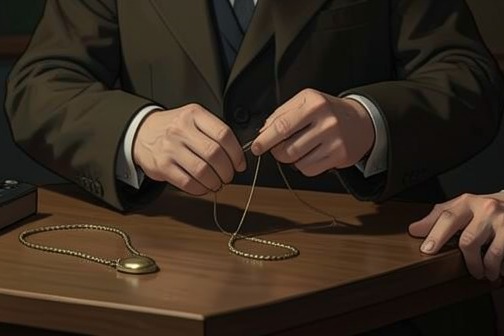
[Tim Allerton](entity:character-recall-character-tim-allerton-59294652b4f8)’s theft and substitution of [Linnet Doyle’s pearls](entity:object-recall-object-linnet-doyle-s-pearls-de35267088aa) is a two-stage deception that initially made the missing necklace look like a straightforward theft. [Hercule Poirot](entity:character-recall-character-hercule-poirot-16ed38cee024)’s reconstruction separates the earlier replacement of the genuine pearls with an imitation from Tim’s later visit to Linnet’s cabin on the night she died. Tim admits taking the necklace from her bedside table, but cannot say whether she was alive or dead; his confession solves the pearl theft without establishing that he committed the murder.
## The substitution behind the apparent theft
Poirot first turns to Tim when Linnet’s pearls are reported missing. The obvious possibility is that Tim has taken them, but that explanation does not account for the subsequent return of a necklace that looks like the missing one. On examination, the returned string proves to be imitation. For Poirot, that difference changes the question: the necklace that disappeared and came back was not the genuine jewel, but an imitation that Tim had already substituted for the real pearls. The apparent recovery therefore conceals an earlier loss of the authentic necklace.
This distinction prevents the two actions from collapsing into a single theft. Tim had arranged for an imitation necklace to be available in place of Linnet’s genuine pearls; on the night of the crime, he entered her cabin and took the necklace he found there. When Poirot identifies the returned string as false, it is not evidence that the genuine pearls have been recovered. It is the clue that the real substitution has already occurred, and that the actual pearls must still be hidden elsewhere.
## How Poirot traces the genuine pearls
Poirot places the genuine pearls in a rosary hanging in Tim’s cabin. Its beads are elaborately carved and unscrew, with a pearl fixed inside each by seccotine. The concealment turns a devotional object into a container designed to appear unremarkable: Poirot reasons that police searchers would generally respect a religious symbol unless something about it gave them a reason to investigate. The rosary’s construction and location account for why a search might fail to find the jewels even after suspicion had fallen on Tim.
Poirot also reconstructs a possible route by which [Joanna Southwood](entity:character-recall-character-joanna-southwood-50109747ce46) sent Tim the imitation necklace. His theory is that it travelled inside a book with a square space cut from the middle of its pages; because a book is open at both ends, it would be unlikely to be opened during postal handling. Poirot connects this possibility to Tim’s arrival from Majorca after he heard that Mrs. Doyle would be on her honeymoon. The proposed method explains how the imitation could have reached him, but it remains Poirot’s theory rather than proof of Joanna’s participation. Tim refuses to admit anything about her and points out that the investigators have no evidence against her.
## The visit to Linnet’s cabin
The immediate theft takes place during the early hours of the night Linnet dies. Someone saw Tim leave her cabin shortly after one o’clock. Confronted with this, he admits that he entered, felt quietly along the small table by the bed, took the necklace, put another string down, and slipped out. The method relies on the fact that Linnet had placed the pearls on the bedside table and, in Tim’s view, was so absorbed by her own troubles that she would be unlikely to notice a change. He also says the opportunity seemed unusually convenient: his cabin was only two doors away.
Tim had assumed Linnet was asleep. When Poirot asks whether he heard her breathing, Tim cannot remember hearing it; he recalls the room as very still. Asked whether he noticed the smell of smoke that might have remained after a firearm had been discharged, he does not think he did, but cannot confidently recall that detail either. Those gaps leave the timing of the theft unresolved: Tim cannot say whether Linnet was alive or dead when he took the necklace. His admission explains his presence in the cabin but does not, by itself, answer the question of her death or make him her killer.
## Admission, motive for secrecy, and limits of the solution
Tim confesses to the pearl theft and accepts that the genuine pearls are where Poirot says they are. He does not provide evidence against Joanna or explain how he obtained the imitation, insisting that the latter is his own business. His response draws a clear boundary between what he will admit and what he will not implicate another person in; Poirot recognizes the correctness of that position without treating it as an exoneration of the theft.
Tim explains that his mother’s friendliness toward Poirot made him uneasy. He disliked the prospect of sitting beside a successful detective just before attempting a risky exchange, and admits that the proximity gave him cold feet, though not enough to abandon the plan. He says he needed to make the exchange at some point and believed the boat offered a unique opportunity. These details establish the practical circumstances of the attempt and his awareness of its risk, not a motive to murder Linnet.
The episode also exposes the danger of letting one conspicuous crime explain every suspicious circumstance. Tim’s presence in Linnet’s cabin on the murder night is significant, but his account leaves the most consequential uncertainty intact: he does not know whether she was alive when he took the necklace. Likewise, the recovered imitation does not restore Linnet’s genuine pearls, and Poirot’s account of Joanna’s possible role is not independently confirmed. The solved theft thus clarifies one strand of the case while preserving the distinction between Tim’s proven act and the still-separate question of who killed Linnet.
Event 10
Murder of Mrs. Otterbourne
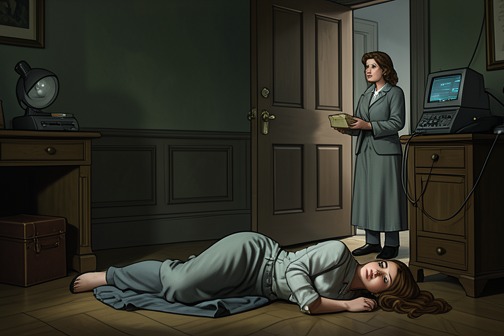
The [Murder of Mrs. Otterbourne](entity:event-recall-event-murder-of-mrs-otterbour-c05dde975f26) is the killing of [Salome Otterbourne](entity:character-recall-character-salome-otterbourne-f4ae703c6ed7) by [Jacqueline de Bellefort](entity:character-recall-character-jacqueline-de-belle-03379cfdd0b8), carried out when Salome’s observation threatened to expose Jacqueline’s role in [Louise Bourget](entity:character-recall-character-louise-bourget-d7913038aeac)’s murder. In [Hercule Poirot](entity:character-recall-character-hercule-poirot-16ed38cee024)’s reconstruction, it was a rapid response to a danger [Simon Doyle](entity:character-recall-character-simon-doyle-104ec16e65c4) recognized and communicated, and it became a second murder committed to protect the conspiracy against [Linnet Doyle](entity:character-recall-character-linnet-doyle-15dd8b9e22bd).
## The danger created by Louise Bourget’s death
Louise Bourget had discovered evidence implicating Simon Doyle and Jacqueline de Bellefort in [Linnet Doyle’s murder](entity:action-recall-action-linnet-doyle-s-murder-9d7484cb2a5f). Jacqueline went to Louise’s cabin, where she killed her; Salome Otterbourne then saw Jacqueline entering the cabin. Salome’s knowledge threatened to connect Jacqueline to Louise’s death, just as Louise’s own knowledge had made her a danger to the conspirators.
Simon Doyle learned that Salome had seen Jacqueline. He asked to see Jacqueline and had Hercule Poirot leave them alone together. Poirot later interpreted Simon’s urgent request and his reaction when Salome approached as a warning to his accomplice: the apparent agitation was not merely nerves, but a signal that Jacqueline had been seen.
## The shooting
Jacqueline acted immediately. Remembering that [Andrew Pennington](entity:character-recall-character-andrew-pennington-b20740f0de07) had spoken of a revolver, she obtained Andrew Pennington’s Colt Revolver, crept outside the door, listened, and fired when the moment came. Her earlier claim that she was a good shot proved relevant to the success of the attack. Salome was killed before she could disclose what she had witnessed.
Jacqueline’s escape depended on speed and proximity. Poirot reasoned that, after firing, she could discard the revolver, hurry into her cabin, disturb her hair, and lie down on the bunk. Her cabin was two cabins away from [Dr. Bessner](entity:character-recall-character-dr-bessner-f0d1fc88ec97)’s. The maneuver was risky, but, in Poirot’s reconstruction, it gave her a chance to appear to have been elsewhere when the shooting occurred.
## Exposure and significance
The attack was not an isolated crime: it followed the carefully timed plan against Linnet Doyle and the killing of Louise Bourget. In recounting the event, Jacqueline acknowledged that she had acted without pausing to think, afraid that Salome would reveal what she had seen. Her admission confirms that the second killing arose from the danger posed by a witness, rather than from a separate dispute with Salome.
The episode also shows why the investigation had to be reconsidered rather than forced into its first theory. Poirot and [Colonel Race](entity:character-recall-character-colonel-race-4c7f50723a8f) initially approached Linnet’s murder as a spontaneous act by someone who had overheard Jacqueline and Simon. Poirot later recognized that the murder had been planned, including the drugging of his wine, and that the removal of Jacqueline’s pistol was a fact his earlier explanation could not account for. Salome’s killing belongs to the same chain of concealment: when an unforeseen witness threatened the plan, Jacqueline acted to prevent the truth from emerging.
Event 11
Simon Doyle–Jacqueline de Bellefort murder-suicide
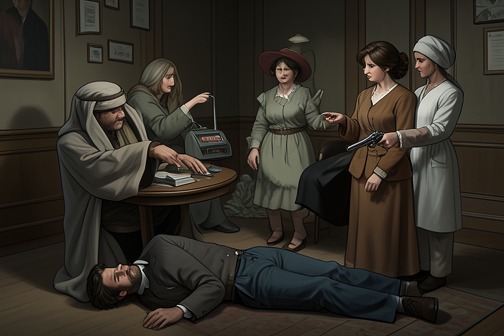
The [Simon Doyle–Jacqueline de Bellefort murder-suicide](entity:event-recall-event-simon-doyle-jacqueline-c23aaf79fff8) is the final violent turn in the investigation aboard the [Karnak](entity:object-recall-object-karnak-48c74e418e7e) steamship: Jacqueline kills Simon while he is being taken away, then dies by suicide with a second pistol. The act brings their shared role in [Linnet Doyle’s murder](entity:action-recall-action-linnet-doyle-s-murder-9d7484cb2a5f) into the open and resolves the mystery of why the weapon used to implicate Jacqueline had been removed from the crime scene. Its ending joins revelation to consequence: the murder plot is exposed, but neither conspirator survives to face its aftermath.
## Causes and Reconstruction
The deaths follow a reversal in the detectives’ understanding of Linnet Doyle’s murder. [Hercule Poirot](entity:character-recall-character-hercule-poirot-16ed38cee024) and [Colonel Race](entity:character-recall-character-colonel-race-4c7f50723a8f) had initially imagined a crime committed on impulse: someone wished to remove Linnet, overheard Jacqueline and Simon’s exchange in the saloon, and took Jacqueline’s pistol after the others had left. That explanation seemed to make the weapon and the letter J on the wall point directly to Jacqueline. But the pistol had then been thrown overboard, an action that did not fit the apparent attempt to incriminate her. Poirot treated this mismatch as a reason to abandon the first theory rather than discard the awkward fact.
The revised account made the murder a carefully planned and timed crime, not a sudden opportunity. Poirot recognized that he, too, had been kept from the night’s events: his wine bottle had been drugged so that he would be asleep. The detail mattered because he drank wine, while [Mrs. Allerton](entity:character-recall-character-mrs-allerton-88e3fc69edd2) drank water and [Tim Allerton](entity:character-recall-character-tim-allerton-59294652b4f8) whisky and soda. In his final reconstruction, the narcotic was one of the arrangements made in advance to prevent his involvement. The weapon’s removal, initially an apparent contradiction, became evidence that the murder had required a particular sequence of actions.
## The Two Pistols
The explanation of the final scene depends on distinguishing Jacqueline’s two pistols. One had been found in [Rosalie Otterbourne](entity:character-recall-character-rosalie-otterbourne-4ceea5f5800f)’s handbag on the day of the search. Poirot later explained that Jacqueline, seated at the same table as Rosalie, had slipped it into the handbag when she realized a search was coming. She subsequently recovered it from Rosalie’s cabin by diverting her attention with a comparison of lipsticks. Because Jacqueline and her cabin had already been searched the previous day, they were not searched again.
That pistol’s temporary placement in Rosalie’s bag explains how the search could have implicated another passenger while leaving Jacqueline able to recover the weapon. It also supplies the concrete basis for Poirot’s realization that Jacqueline had possessed a pair. The pistol used in the final act is not the weapon whose removal had puzzled him: it is the other one, which Jacqueline still has when the deaths occur. In this way, the last scene answers the investigation’s central material question without undoing the clues that had made the first theory seem persuasive.
## The Final Act
After Jacqueline says that the game has been lost, she stands aside as the bearer takes hold of the stretcher handles. She bends down as if to tie her shoe, reaches to the top of her stocking, and straightens with a pistol in her hand. She fires at Simon. Jacqueline then remains standing briefly, holding the weapon, and gives Hercule Poirot a fleeting smile. When Colonel Race moves toward her, she turns the pistol against herself and fires. She sinks to the floor; the scene leaves both Simon and Jacqueline dead.
The sequence is decisive in its order. Jacqueline first kills Simon, then turns the same weapon on herself; her death is not a separate later episode but the immediate completion of the paired act. Her earlier movement toward her stocking and the pistol’s appearance there make the second weapon visible at the moment it changes the outcome. Until then, the investigation’s attention had centered on the missing pistol and its power to frame her. Now the concealed weapon becomes the means by which the two central participants die.
## Consequences and Significance
Afterward, Mrs. Allerton asks Hercule Poirot whether he knew Jacqueline had another pistol. He explains the discovery in Rosalie’s handbag, Jacqueline’s recovery of it, and the failure to search her again. He also says that he wanted Jacqueline to take that way out, but that she would not take it alone. His explanation connects the final deaths to his understanding of her choice without erasing the difference between the two actions: Simon is killed by Jacqueline, and she then kills herself. Mrs. Allerton’s response is to reflect on love’s capacity to become frightening, while her gaze turns to Tim Allerton and Rosalie Otterbourne standing together in the sunlight.
The ending closes the plot by making the missing pistol intelligible and confirming the disastrous bond between Jacqueline and Simon. It also gives the investigation’s method its final test: an explanation must account for the facts that resist the first theory, including the weapon’s removal and the existence of another pistol. Yet the answer does not restore what the crime has destroyed. The investigation can reconstruct the plan and identify the sequence, but its resolution arrives through two deaths. Afterward, the passengers go ashore, and the bodies of [Louise Bourget](entity:character-recall-character-louise-bourget-d7913038aeac) and [Salome Otterbourne](entity:character-recall-character-salome-otterbourne-f4ae703c6ed7) are also carried off the ship, marking the wider toll of the case as the voyage ends.